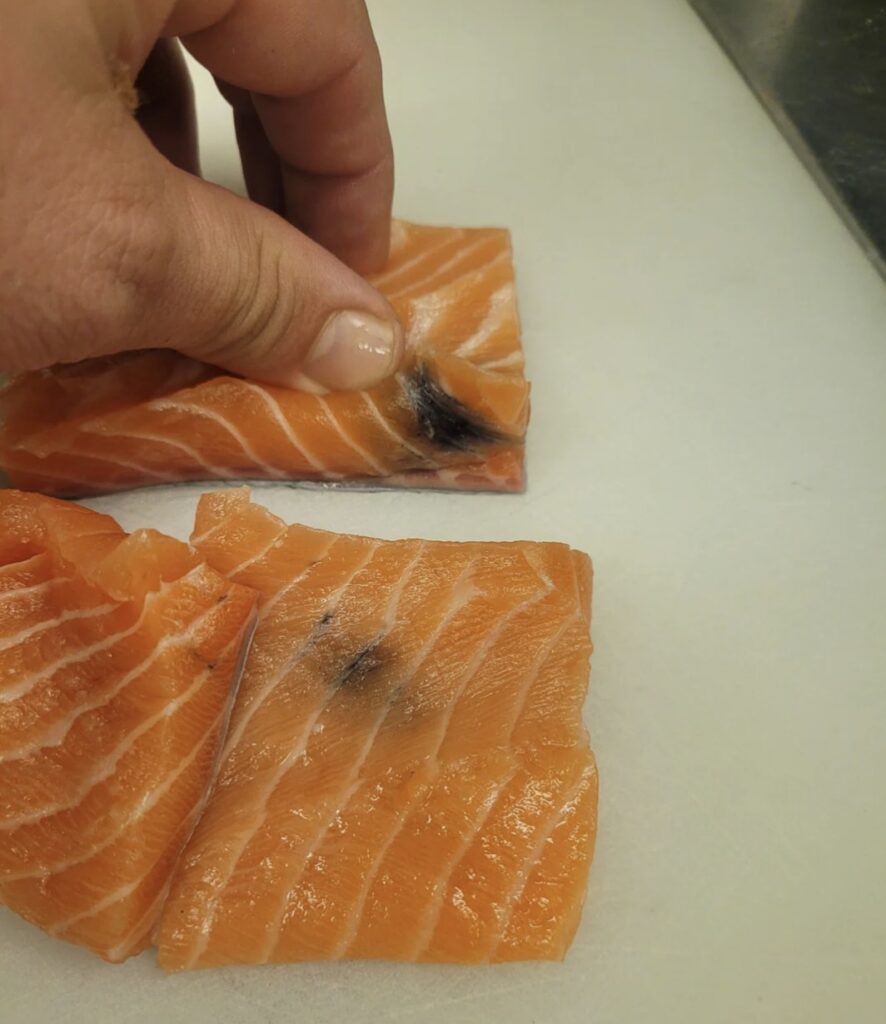
My family loves salmon. Seriously, it’s a staple in our weekly meal rotation. Whether it’s grilled to perfection with a squeeze of lemon or slow-cooked in a tangy teriyaki glaze, it’s always a crowd-pleaser. But the other day, I thawed a beautiful fillet I had in the freezer, and to my horror, I noticed a strange yellowish tint on the flesh. I wondered, “What is this, and can we still eat it?”
Initially, I was worried. Salmon has always had that gorgeous pinkish hue that makes my mouth water every time I see it, so a weird, yellowish spot was definitely not a sight I expected. I started playing detective in my kitchen, retracing my steps to see if I had done something wrong. Could it have been in the freezer for too long? Was it stored improperly? Or maybe it had gone bad without me realizing it?
After a deep dive into the world of seafood safety (and a couple of hours Googling while sipping coffee), I learned that a yellow tint on defrosted salmon isn’t necessarily an immediate cause for panic. Here’s what I found out.
Understanding Fish Fat
First, I discovered that the yellow tint is often attributed to oxidized fat. Salmon is a naturally fatty fish, which is one of the reasons it tastes so rich and succulent. But sometimes, when frozen for long periods or improperly stored, the fat can oxidize and change color. It’s a lot like what happens when you leave an apple slice out in the open for too long and it starts to turn brown.
This oxidation doesn’t necessarily mean the salmon is bad or unsafe to eat. It’s more about the quality and appearance. Of course, you’ll want to ensure the fish doesn’t have any other signs of spoilage like a sour smell, slimy texture, or an off-putting taste, which are all indicators that the fish might not be safe.
