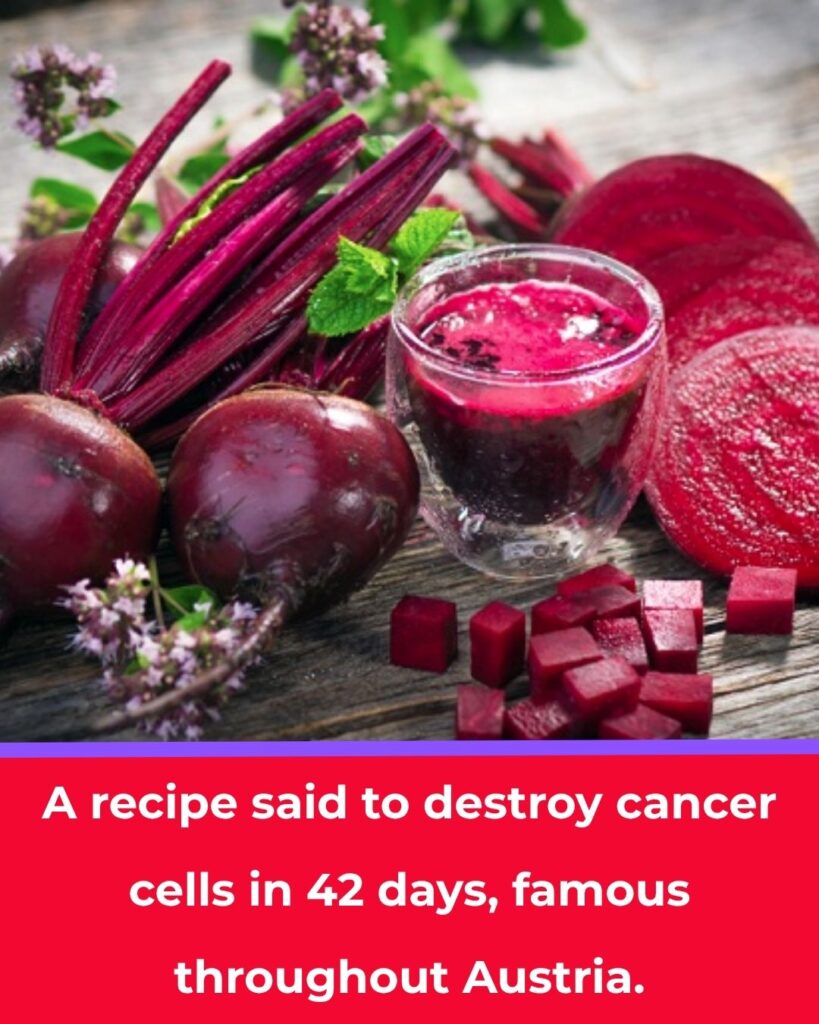
Images and headlines claiming that a simple recipe can “destroy cancer cells in 42 days” often spread quickly online. Beetroot juice, in particular, is frequently promoted as a miracle solution. While beets are undeniably nutritious and beneficial as part of a healthy diet, it is important to separate proven benefits from exaggerated or misleading claims.
Why Beetroot Is Considered a Healthy Food
Beetroot is rich in vitamins, minerals, and natural compounds such as antioxidants and nitrates. These nutrients support general health by helping maintain normal blood circulation, supporting digestion, and contributing to overall vitality. Beets are also high in fiber and contain plant pigments called betalains, which are associated with antioxidant activity.
Including beetroot in meals or juices can be a positive dietary choice, especially when combined with other vegetables and whole foods.
Where the Cancer Claim Comes From
Some laboratory studies have explored how certain plant compounds behave in controlled environments, such as test tubes. These studies are often misinterpreted or exaggerated when shared online. Observing an effect on isolated cells in a lab does not mean the same result occurs in the human body.
There is currently no scientific evidence showing that beetroot juice—or any single recipe—can destroy cancer cells in humans within a fixed time frame. Cancer is a complex group of diseases, and treatment requires professional medical care based on extensive clinical research.
The Risk of Misinformation
